Misc KPI Reports
Jira Due Date Change History
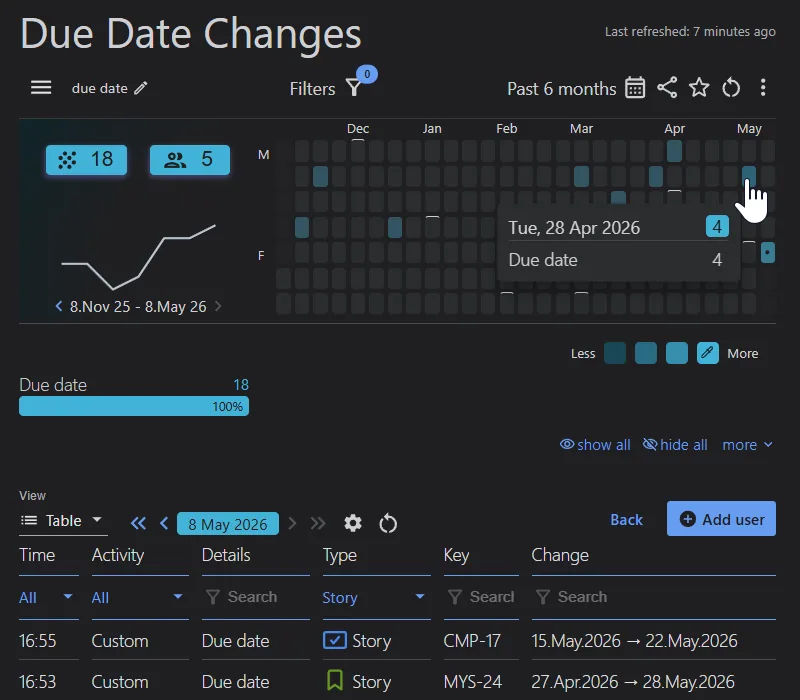
See how to pull an aggregated Jira due date change history report, instead of playing detective across individual Jira issue history tabs.
In project management, keeping a reliable project baseline is important for accurate planning. While a significant number of Scrum teams prefer Story Points, many agile and traditional teams choose time estimates (hours or days) because they align more directly with client billing, capacity limits, or internal resource tracking. In Jira, the Original Estimate field serves as this primary reference point against which a team’s planning accuracy and progress are measured.
However, a common challenge many teams face is baseline drift. When original estimates are modified quietly after a sprint or project has started, it can alter your reporting data, mask scope changes, and skew historical velocity.
With the User Activity Timeline for Jira app, you can easily see when and by whom estimates were changed. By leveraging the app’s capability to track custom events, you can build a dedicated Original Estimate Change History Report to monitor baseline stability across users and teams, for one or multiple projects, looking back up to one year.
Because Jira allows users with edit permissions to update fields at any time, original estimates often get modified during active development. Keeping an eye on these changes is beneficial for several reasons:
Using Story Points instead?
If your team uses Story Points rather than time tracking, you can apply this same reporting method. Instead of tracking the Original Estimate field, configure your custom event to capture updates for the Story Points field- when the field value changes from “was not empty”, allowing you to see exactly how your team’s sprint scope shifts.
A key advantage of User Activity Timeline for Jira is its flexibility. You can isolate and analyze specific field changes by creating custom events, while the aggregated calendar view makes the data easier to understand at a glance and provides more context than a simple list of changes.
Here is how you can set up a report focused on Original Estimate changes:
Step 1:Access the app through the Jira sidebar and click “Create Report”.
Step 2:Enter a descriptive report name. Add the users whose activity you want to track, and select the default view for the report.
Step 3:Open the Reported Activities modal and disable all default activities.
Step 4: Add a custom activity:
Step 5: Save the configuration. If needed, apply additional filters or adjust the reporting date range to align with your reporting needs.
Review the report based on your view settings
Once configured, the report organizes individual Jira history entries into a clear visual overview:
A successful project relies on a dependable baseline. By monitoring changes to your original estimates, you gain the visibility needed to protect project scopes, calibrate planning accuracy, and keep your data reliable.
Best of all, this report is easy to manage on the go. You don’t need to build a new view from scratch every time; simply pull up an existing report that already has your team, projects, and date filters saved, disable all activities and apply your custom estimate change filter. Within a few clicks, you have a clean, focused view of your team’s estimation history.
This is just one of many Jira activity reports you can configure with** User Activity Timeline & Work History**. Install the app from the Atlassian Marketplace to start monitoring field change history across your Jira instance.
See how to pull an aggregated Jira due date change history report, instead of playing detective across individual Jira issue history tabs.
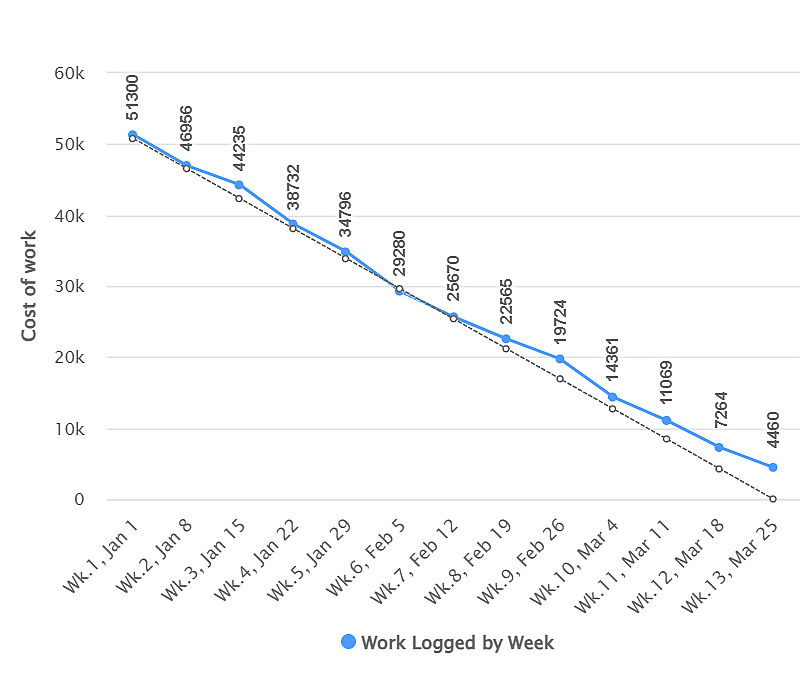
Leverage Formula and Target features for Budget vs Actual cost report in Jira using Performance Objectives: Charts for Jira app.
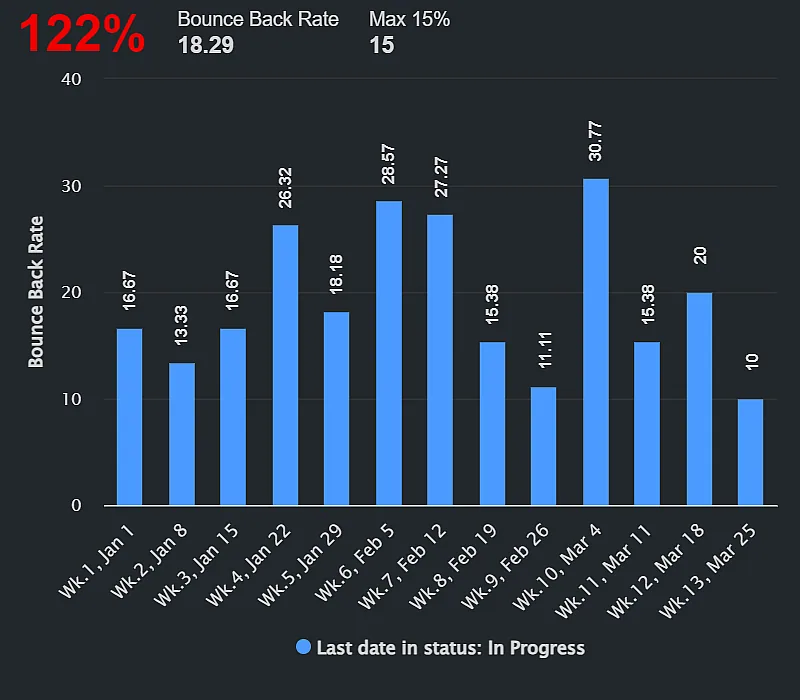
Configure a Bounce Back Rate report in Jira using the Performance Objectives app. Monitor this KPI from your Jira dashboard to optimize workflow and improve project efficiency.
DevAcrobats develops reporting apps for Jira that extend its capabilities, enabling teams to streamline workflows and enhance performance.
Postal Address:
47A Cherni Vrah Blvd., fl.4-5, Puzl, 1407 Sofia, Bulgaria
Email: office@devacrobats.com