Time Tracking
Flow Efficiency Ratio for Jira Kanban Teams
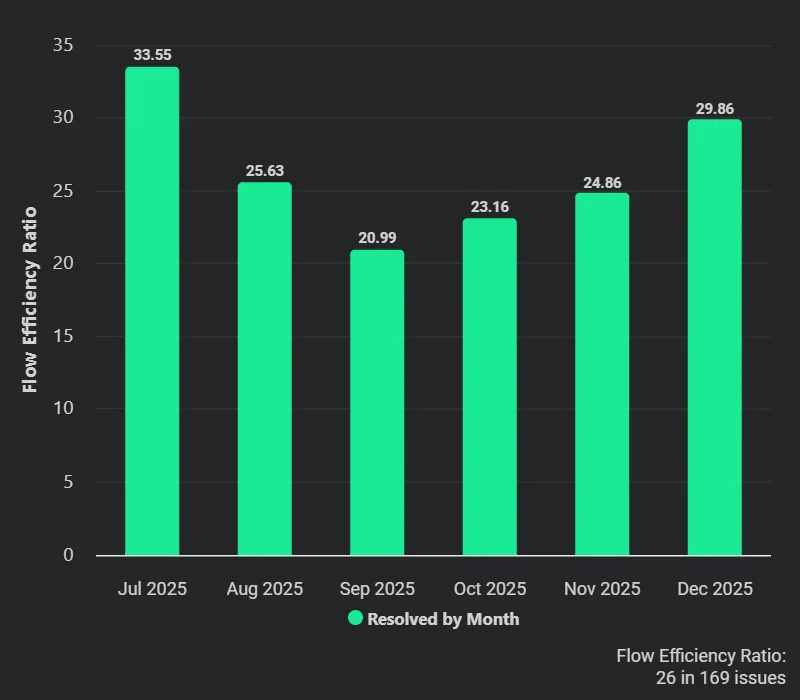
Configure a Flow Efficiency Ratio report on your Jira dashboard to measure active work vs waiting time and identify process bottlenecks.
As highlighted in our blog post, it’s important to note that the Jira system field ‘Time Spent’ might not always provide the precise time results you anticipate when reviewing worklogs for specific periods such as months, weeks, or days. Choosing the right metric and configuring the display by field is paramount for ensuring accurate worklog time tracking reports. However, another important factor is selecting the right filters in the data source to precisely capture the timeframe of when logs occurred. An issue may have multiple ‘Work Logged Date’ entries due to multiple worklog instances from different team members who worked on the issue (i.e., ‘Work Log Authors’).
The Performance Objectives provides a selection of ready-to-use **metrics**and fieldsdesigned to read, calculate, and present data from your issue history. Among our app’s supported metrics and fields, for precise worklog tracking and reporting, consider using:
Here’s an accurate “Last Week’s Work Log Time by Work Log Author” report. We’ve leveraged the Targetfeature within the app to establish a goal of a minimum of 35 work hours logged per week for each employee (Work Log Author).
Here are the steps you can follow to create a precise worklog tracking report with a predefined target using our app:
**Step 1: **In your Data Source, select Work Logged issues and choose the date range you are interested in. In our sample, this is Last Week.
Step 2: Choose the metric ‘Work Log Time (h)’
Step 3: For Display By, select “Work Log Author” field
Step 4: Turn the Target feature on and select “Fixed Target”
Step 5: Choose “Per x-axis item” type of target calculation
Step 6: Add a specific value for the target. In our sample, we have defined 35 hours per week as the goal.
Below is a detailed configuration of the Data Source for Step 1. On the right image, we have applied additional filtering of the data source by ‘Work Log Author’. This approach is useful if you wish to narrow the results only to specific team members who have worked on and logged time for your project issues.
Additionally, we have set the default view of the Performance Objectives gadget to Tiles and have also included a threshold line as a percentage of the target. However, these steps are optional. If you wish to proceed with them, open “More Settings”.
In the domain of project management, precise time tracking and worklog time tracking holds utmost importance for assessing progress, allocating resources effectively, and estimating future tasks and overall capacity. Nevertheless, relying in all cases on the standard Jira field “Time Spent” can often result in misleading reports and inaccurate insights. If you want to learn more on the topic, this blog post aims to delve into the Limitations of Reporting on Time Spent by Assignee in Jira. Additionally, here is a comprehensive list with detailed explanations of why alternative configurations may not yield the expected results in the “Last Week’s Work Log Time by Work Log Author” scenario.
In the example above, we’ve utilized the Performance Objectives gadget in Tiles view. To explore more about our app’s features, refer to our Documentation, gain inspiration from our KPI Examples.
Configure a Flow Efficiency Ratio report on your Jira dashboard to measure active work vs waiting time and identify process bottlenecks.
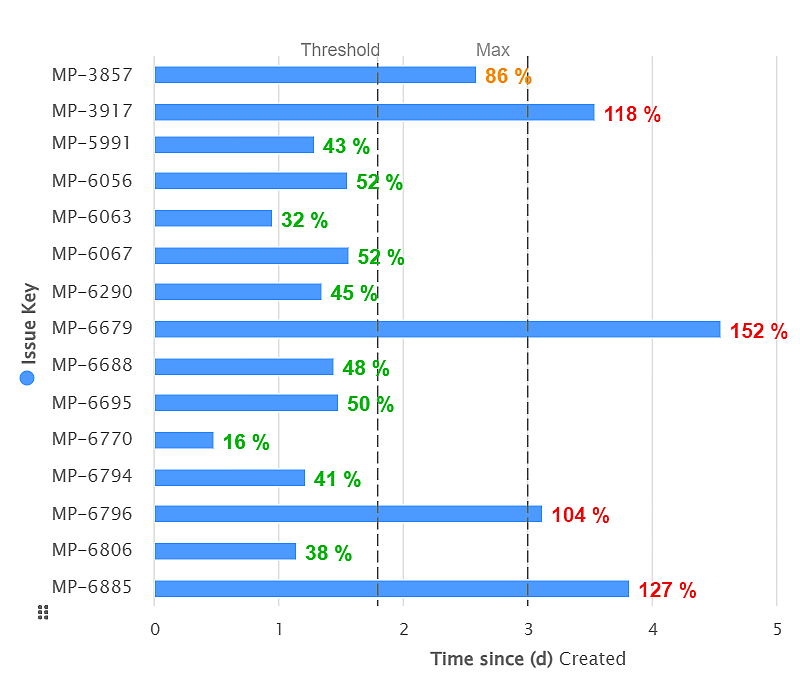
Track time since any standard or custom Jira date field with the Performance Objectives app. Create KPIs such as 'Max issue age'.
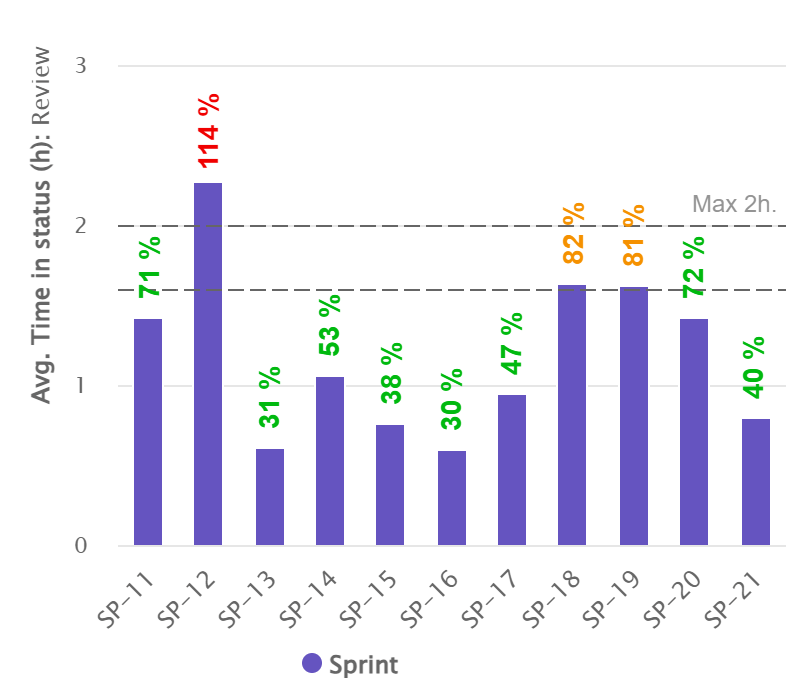
Optimize your sprint performance with Jira KPI reports, analyzing average time in status in sprint. Enhance efficiency and identify bottlenecks effectively.
DevAcrobats develops reporting apps for Jira that extend its capabilities, enabling teams to streamline workflows and enhance performance.
Postal Address:
47A Cherni Vrah Blvd., fl.4-5, Puzl, 1407 Sofia, Bulgaria
Email: office@devacrobats.com